Central Asia countries unite to build a resilience and safe future
17 October 2025
Dushanbe, 17 October 2025 - On 16-17 October 2025, Dushanbe in the Republic of Tajikistan hosted a series of high-level regional events focused on disaster risk reduction, urban resilience, and early warning systems in Central Asia.
Three major gatherings - the Early Warnings for All (EW4All) Regional Partners Meeting, the Regional Urban Resilience Dialogue, and the Regional Forum of Heads of Emergency Authorities of Central Asia - brought together governments, development partners, and city representatives to strengthen cooperation and accelerate joint action for a resilient future.

Early warnings for all: Protecting everyone by 2027
The Regional Partners Meeting on Strengthening Early Warning Systems (EWS) and EW4All Implementation gathered representatives from Central Asian governments, UN agencies, development organizations, and financial institutions.
Participants reviewed progress in implementing the EW4All initiative, discussed enhancing multi-hazard early warning systems, developed key recommendations for strengthening partnerships and identified joint investment opportunities to ensure that everyone in the region is protected by early warning systems by 2027.
The meeting was organized by the UN Office for Disaster Risk Reduction (UNDRR), German Agency for International Cooperation (GIZ) with the Committee of Emergency Situations and Civil Defense under the Government of Tajikistan (CoES) and the Center of Emergency Situations and Disaster Risk Reduction (CESDRR), and supported by the Government of Switzerland and the Government of the UK.
Regional urban resilience dialogue: Cities leading the way
In parallel, UNDP, UNDRR, CESDRR, and the Government of Tajikistan, with financing from the Government of Japan, convened the Regional Urban Resilience Dialogue. The event gathered mayors and technical experts from Dushanbe (Tajikistan), Petropavlovsk (Kazakhstan), Osh (Kyrgyzstan), Ashgabat (Turkmenistan), and Namangan (Uzbekistan), along with representatives from Japan, academia, and partner organizations.
The Dialogue showcased regional and global efforts to build more resilient cities and encourage city-to-city collaboration. A key outcome was the launch of the Regional Urban Resilience Coalition in Central Asia and the signing of a Joint Declaration under the Making Cities Resilient 2030 (MCR2030) Initiative.
Participants exchanged practical tools, city risk profiles, and innovative solutions for integrating disaster and climate risk reduction into urban planning. The event also featured Japan's experience in urban resilience and a technical session on AI-driven approaches to resilient urban development.
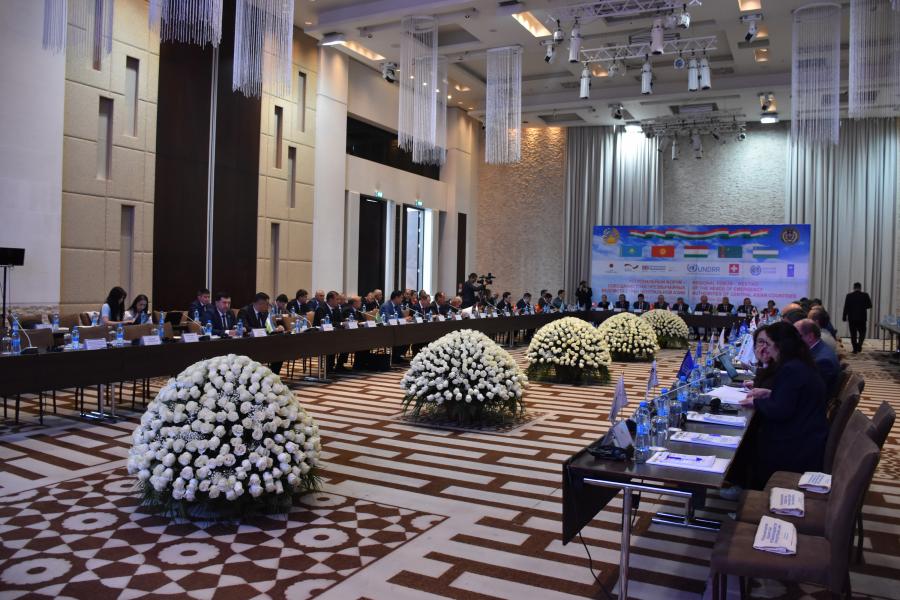
Regional forum of Heads of Emergency Authorities
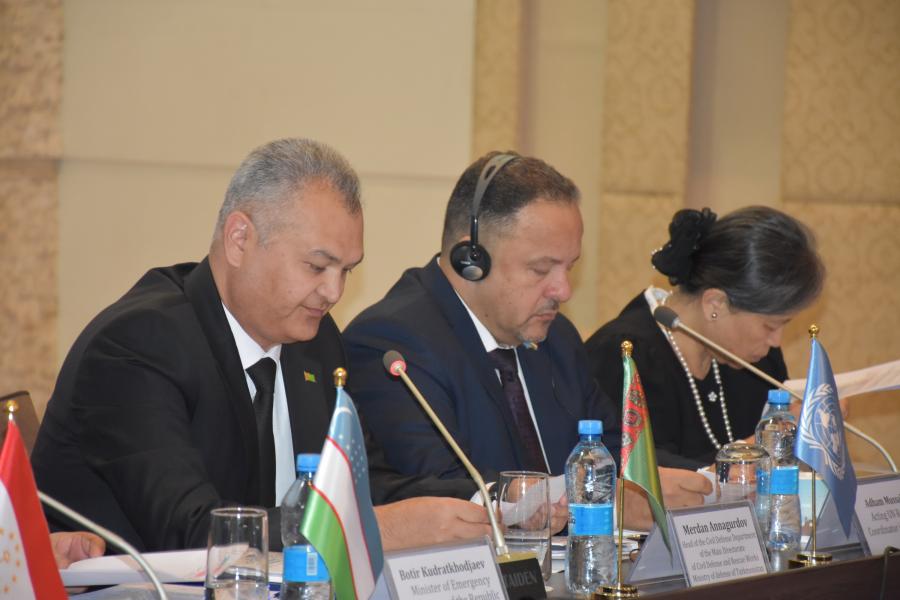
The two-day programme concluded with the Regional Forum of Heads of Emergency Authorities of Central Asia, hosted by the Government of Tajikistan and organized by CESDRR, UNDP, GIZ, and UNDRR, with the financial support of the governments of Switzerland, the UK, and Japan. The Forum gathered senior officials from Kazakhstan, Kyrgyzstan, Tajikistan, Turkmenistan, and Uzbekistan, as well as representatives of international partners and UN agencies.
Discussions focused on implementing the Regional Disaster Risk Reduction (DRR) Strategy 2022-2030, enhancing cross-border cooperation, and aligning national priorities with global frameworks such as the Sendai Framework for Disaster Risk Reduction, the Paris Agreement, and the 2030 Agenda for Sustainable Development.
Key outcomes
- Launch of the Regional Urban Resilience Coalition in Central Asia and endorsement of a Joint Declaration by Central Asian cities.
- Strengthened commitment to implement the Early Warnings for All initiative and enhance multi-hazard early warning systems across the region.
- Agreement to deepen cooperation under the Regional DRR Strategy 2022-2030 and promote inclusive approaches that address the needs of vulnerable groups.




UN entities involved in this initiative
Goals we are supporting through this initiative