Tajikistan Commemorates World Day Against Trafficking in Persons with High-Level Roundtable on the Nexus between Gender and Technology
30 July 2026
Senior government officials, United Nations representatives, civil society and international partners gathered in Dushanbe for a High-Level National Roundtable marking World Day Against Trafficking in Persons on 30 July 2026.

The roundtable brought together over 70 national and international partners, including deputy ministers and senior representatives from across the Tajik Government to discuss the intersection between gender, technology, and trafficking in persons in Tajikistan, providing a platform to exchange experiences, explore emerging risks and opportunities, and identify practical recommendations to strengthen national responses. The event was organized by the Inter-Ministerial Commission to Combat Trafficking in Persons in collaboration with United Nations Office on Drugs and Crime and the International Organization for Migration.

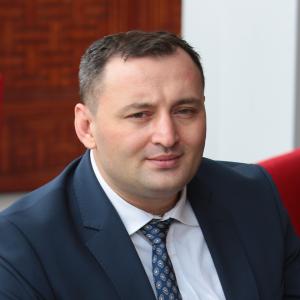
Mr. Abdurahmon Alamshozoda, First Deputy Minister of Internal Affairs and Chairperson of the Inter Ministerial Commission to Combat Trafficking in Persons, in his opening remarks described how traffickers have adapted their methods to exploit digital tools and human trust rather than force. First Deputy Minister Alamshozoda also noted why gender was placed at the center of the discussion, “traffickers no longer choose victims at random but study behavior on social media to identify which promises most influence young women, which offers attract men seeking work, and which words win the trust of teenagers", a pattern he called "a new level in the methods of modern criminals”.
Ms. Parvathy Ramaswami, UN Resident Coordinator (UNRC) in her opening remarks stated that trafficking in persons is not a phenomenon confined to history or distant places. It is here and now & changing its shape before our eyes. She urged all to act together to stand with victims, to hold perpetrators to account and to build our world where no one is bought, sold or exploited”.
To further address this rapidly growing form of trafficking, state actors, international organizations and civil society were called upon to:
- strengthen victim identification, investigations, and prosecutions through specialized training and cross-border taskforces;
- support legislative reform processes needed to prosecute the full range of crimes tied to these operations, from money-laundering to cyber-enabled fraud; and
- promote accession to and implementation of the UN Convention against Cybercrime, the first globally binding treaty of its kind, as a framework for expediting judicial cooperation and standardizing handling of electronic evidence.
The UNRC welcomed Tajikistan's signing of the UN Convention against Cybercrime, the first global, legally binding treaty aimed specifically at countering digital crime, in March 2026 and encouraged the government to move toward ratification. She reaffirmed the UN Country Team's commitment, alongside the EU and the Norwegian Agency for Development Cooperation, to backing Tajikistan's prevention, protection, prosecution, and partnership efforts against trafficking.
Ms. Isabel Uriz, Head of Cooperation of the European Union Delegation in Tajikistan underscored continued international support for Tajikistan's counter-trafficking efforts. She stressed the importance of putting victims at the center of our solutions, as well as recognizing the vulnerabilities of women and girls to sexual exploitation.

Following the opening remarks, the event agenda included sessions on forced criminality in scam centers and sharing Tajikistan’s experience. Presenters stated that traffickers use social media platforms to recruit and abuse victims, including for forced criminality. In addition, victims of forced criminality from Central Asia have been identified in KK Park in Myanmar. Participants agreed that safeguarding women, girls, and other vulnerable groups from online recruitment and exploitation requires not only stronger legal and investigative frameworks, but also closer collaboration between the public and private sectors, particularly technology and social media companies, to detect and disrupt trafficking networks operating in digital spaces. The event reaffirmed the commitment of the Government of Tajikistan and its international partners to a victim-centered, gender-responsive approach to combating trafficking in persons in all its forms.
**************************************************************************
The event was held under the umbrella of the EU-funded initiative PROTECT: Improving Migration Management & Migrant Protection in Selected Silk Route Countries (2023-2026). UNODC is implementing the EU-funded PROTECT initiative within the framework of GLO.ACT across Afghanistan, Iraq, Pakistan, and Tajikistan. This initiative also addresses challenges in the broader Central Asia region, including the Kyrgyz Republic, Kazakhstan, and Uzbekistan, with a primary focus on enhancing the effectiveness of responses to trafficking in persons (TIP) and smuggling of migrants (SOM), particularly in relation to criminal justice.
This project is funded by the European Union.



UN entities involved in this initiative
Goals we are supporting through this initiative